E-signatures
Releasing a verified result requires an electronic signature. Signing is deliberately a distinct, deliberate act — not something that happens because you have a live session.
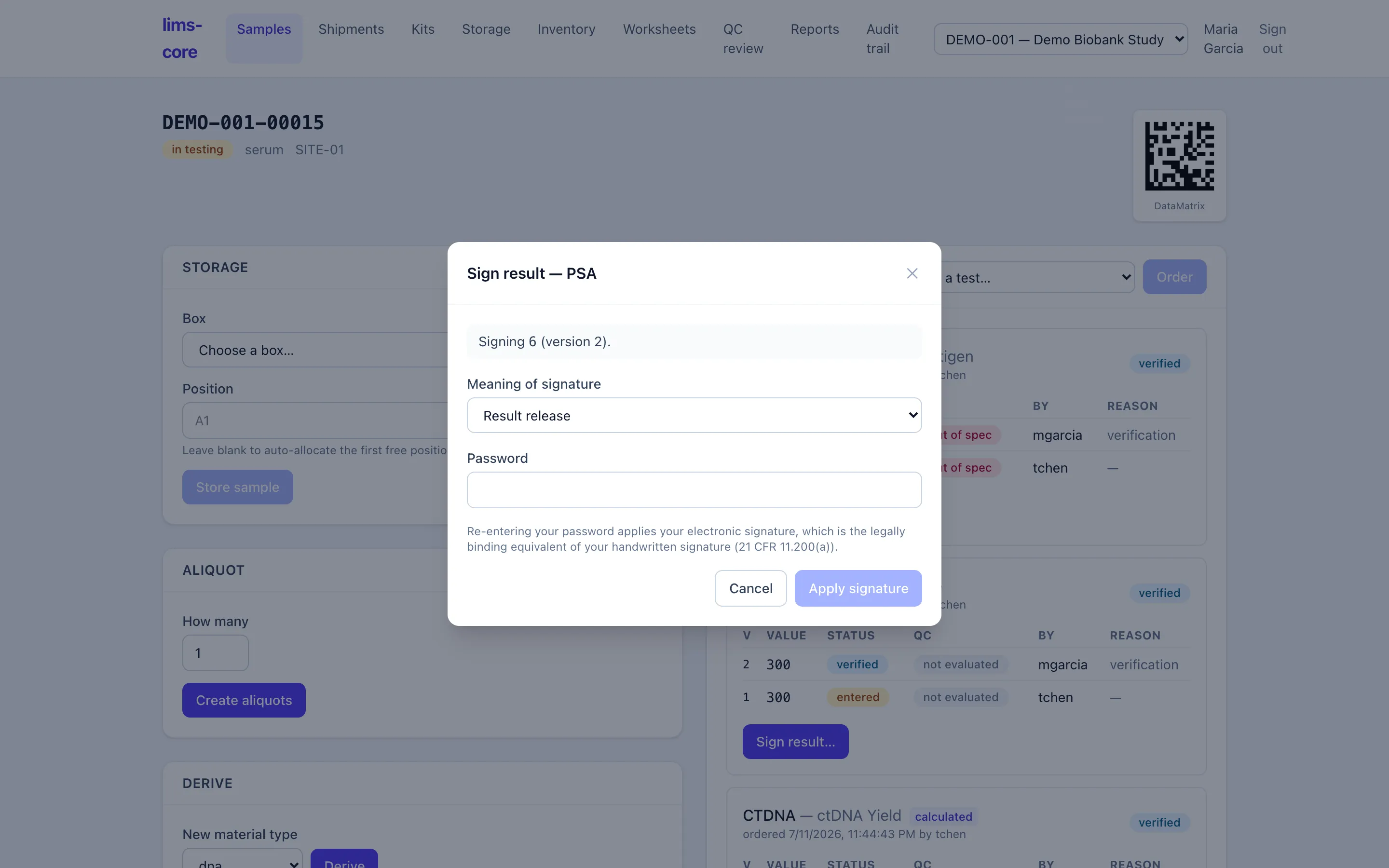
Password step-up
Section titled “Password step-up”To sign, the signer re-enters their password — a step-up re-authentication that re-establishes identity at the moment of signing (requirement P11-12). A wrong password is rejected, and failed attempts count toward account lockout exactly like failed logins.
What a signature binds to
Section titled “What a signature binds to”When you sign, you state the meaning of the signature — what you are attesting to — and it is recorded with the signature (requirement P11-06). The signature is then cryptographically bound to the exact result version it approves, via a hash of that record (requirement P11-09).
Because it is bound to one specific version, a signature cannot be:
- edited or deleted,
- moved to a different record, or
- carried forward onto a later version of the same result.
The only thing that can happen to a signature is invalidation — a one-way action, recorded on the record with a reason, that never erases it (requirement P11-10). Once a result is signed, the audit trail holds the whole story: entry, verification, and signature, each attributed.